Thursday, July 13, 2017

The Salt Mines and the City

This morning, we got up earlyish to catch the train for Wieliczka, where we had a tour of the salt mines scheduled. We had to walk down 340 steps (63 meters) on wooden staircases which had about 6 steps to each landing. Not quite a spiral staircase, but close. A word about the mines: it has been a tourist destination since the mid-1800s, and that shows in the way they run the tours and have merchandising opportunities. Capitalism is alive and well at this particular spot.

Back to the main description: the mines themselves do not have structural integrity, so have a lot of support structures. Since iron or steel would obviously rust in this environment, wood is the building material of choice. In many places, the wood was whitewashed to reflect light better throughout the tunnels.

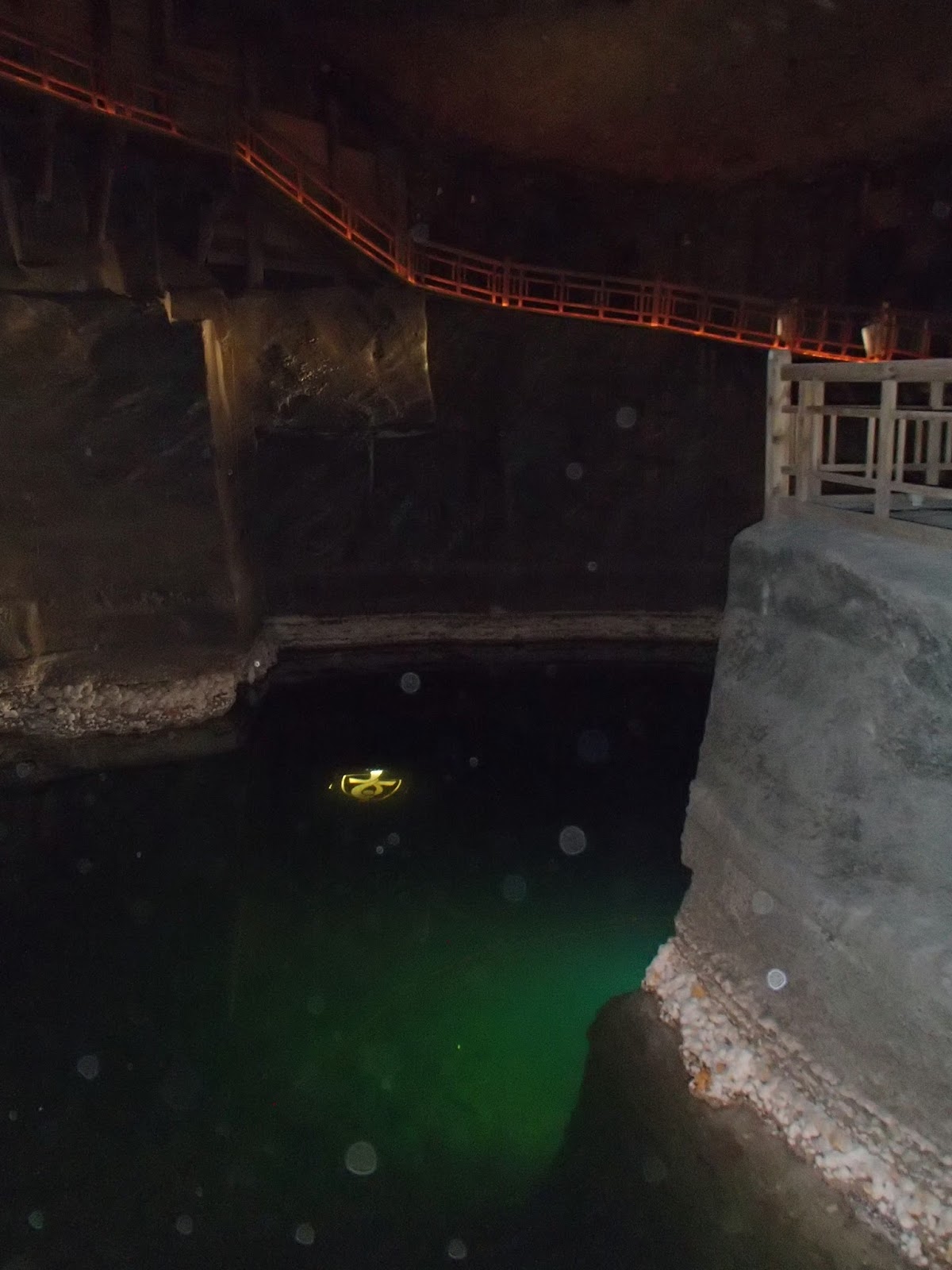
The salt is a dark grey to black because of impurities, but occasional bright white crystal inclusions occur. These inclusions were generally set aside for other purposes (one of those is shown in the photos). There are several ponds in the caverns, saturated brine in which even the most muscular body will float, and many different sculptures hewn directly from the salt. The sculptures date from the mid-1800s to practically present-day.

Many areas of flooring were salt, and it was surprisingly smooth. In fact, all of the walls were much smoother than I'd expected; in many places, the walls reflected glassily.
The staircase vanishes quickly in the distance...53 landings

Salt floor


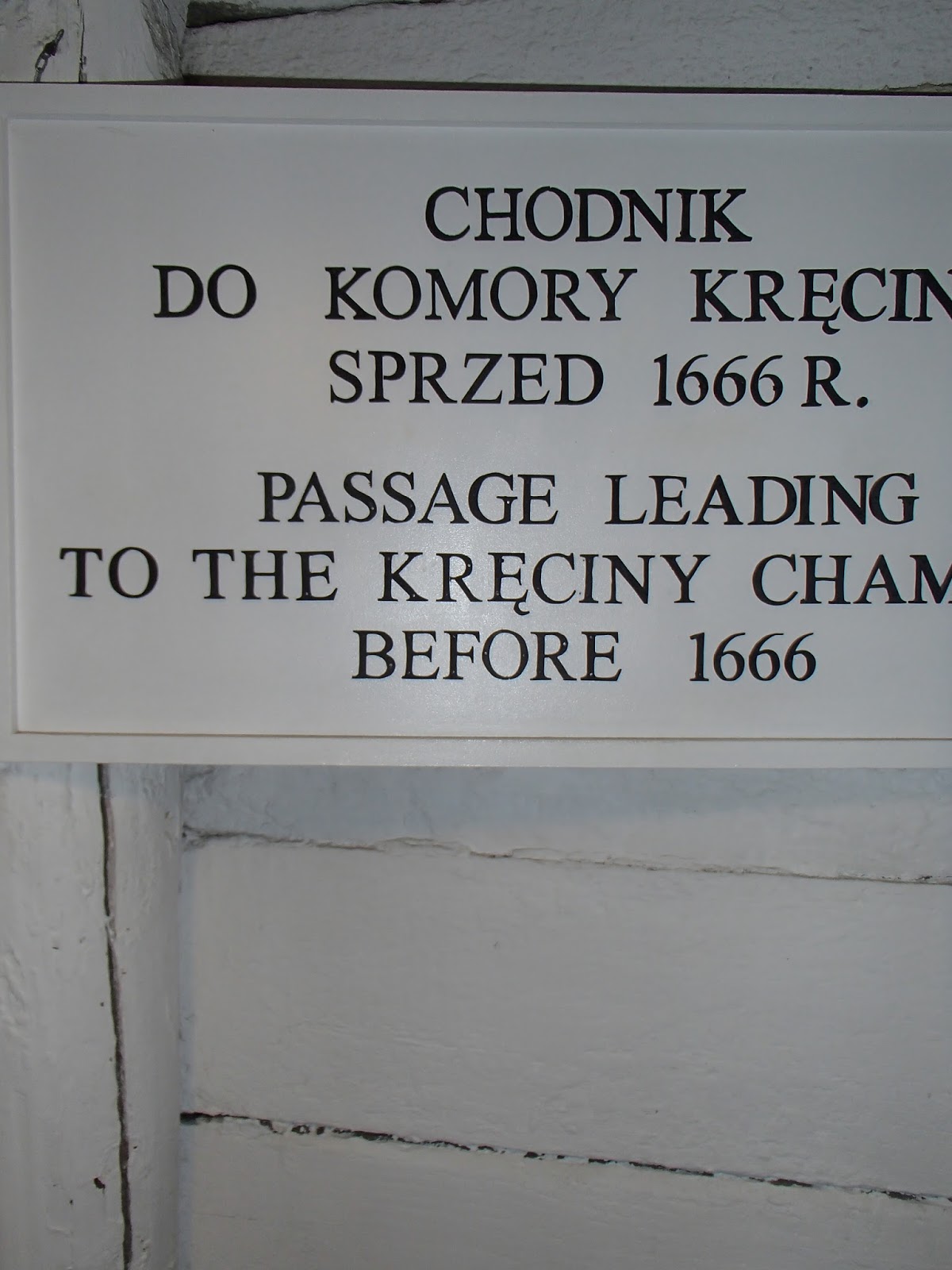
Many of the passages dated to the 1600s
(and probably incorporated older passages)

Jeremy NOT licking the walls

Doorway to the manager's office.
I couldn't get the salt steps in the picture.

Salt cauliflowers...a type of bloom caused by water intrusion

Sculptures depicting the myth of the salt mines

Wall texture


Stairs hewn in the salt; a major source of accidents and death

Dwarf sculptures!

Drainage systems
 
Pump to remove water to the surface

A chapel to give thanks for no loss of life during a flood

The chandelier's crystals are made from pure salt inclusions found in the mine.
This chapel was planned in the 1800s based on an existing cavern


The walls of the chapel are covered in carvings of Bible stories

Holy water

The nativity

Salt floor in the chapel


It was really interesting to see
how they took advantage of salt's translucence.


A theatre for visitors; used to be used for concerts in the 1800s
Brine lake

After a trip back to the surface in the shaft elevator, it was time to get to Krakow for lunch. Our hostel owner told us about a place to get pierogi and other local foods, so we chose to go there for lunch. We felt so special though: our waiter from last night was getting out of his car, and came up to us to greet us! How sweet is that?? At that point he taught me "good morning", but I think I have already forgotten how to say that. Sigh. Have I said how hard Polish is? I used to think I was pretty reasonable at picking up languages, but it's just kicking me in the tush. On the other hand, the locals are prepared to help and laugh along with me when I mess up.

Back to today's lunch: we each had a full meal for under $11. That is TOTAL, not per person. Jeremy had an enormous plate of pierogi, Florence had sausages, and I had a borscht with carrot salad on the side. Yum!
I won "most colorful lunch" award. Stained my entire mouth and teeth pink!

After lunch, Jeremy went looking for towers to climb, we visited the church dedicated to Mary (a beauty, painted floor to ceiling in lovely designs, and no gilt was spared), wandered in the market, went to several antiques shops, and more! Later in the afternoon, we attended a concert in the oldest church in Krakow (which seems a bit spurious as a claim, since they stated that the original had burnt down and a new one erected....perhaps the oldest parish, but not sure about the oldest building statement). The concert was a string quartet that plays every day, and unfortunately it was only too obvious that they wanted to get in, play their set pieces, and get out. Every single piece was rushed, and while the first-chair violinist was absolutely adorable when he improvised, even those segments were somewhat sadly spoilt by the complete boredom on the faces of the other players. Sad. On the other hand, the acoustics were great, and we got to hear some fun improv. Emerging, we enjoyed street musicians playing jazz and a host of other activity.


Back to dinner in the apartment (we were tired!) and it's time for bed.

Love,

Alexandra

Wednesday, July 12, 2017

On to Krakow!

Yesterday was spent mostly in packing and on the train, although we did have time for a traditional lunch of baked potatoes, which were scrumptious! Our first impressions of Krakow were delightful: it was dusk, and we had to walk through Medieval walls and just inside the walls adjacent to the most charming buildings in order to get to our hotel. The hotel dates to the 1700s, and has a great entryway (although the room itself is set up as a hostel, and must confess that it's not shall we say the most luxurious apartment we've ever seen...it is clean, though, so that's all to the good!).

Since we arrived late, we decided to dine in the restaurant next door. It was so pleasant: our waiter speaks quite a bit more English than we do Polish, but was nonetheless a little limited. During the course of our meal, we exchanged a ton of smiles and he attempted to teach us a few more phrases (not altogether successfully, I must admit). He even let us stay in the garden well past the normal garden closure time and brought us some meringues as a treat for when we were paying our bill! A complete love.

And then off to bed in preparation for an early start.

Love,

Alexandra

Going Separate Ways

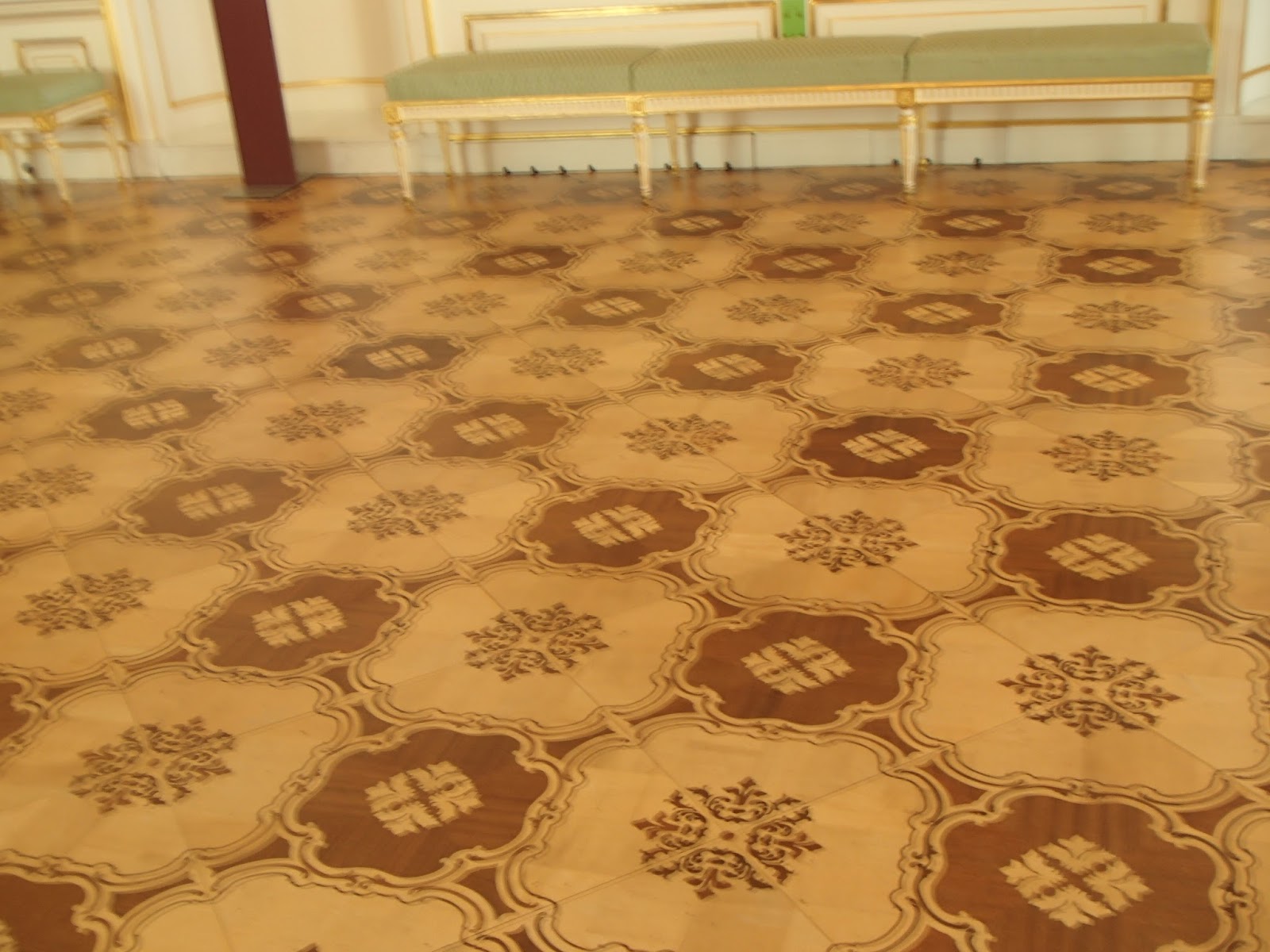
Today, Jeremy got up early to catch the train to a nearby town where they had a locomotive museum. Florence and I declined his kind invitation to join him (he will provide his own post on his day) and instead went to the Planetarium to purchase tickets for the evening's performance, then walked up to the Royal Palace. Completely shattered during WWII, it has been restored to its former splendor. And splendid it was! The floors were all beautifully laid in marquetry work, the furniture was lovely, and the marble work was sublime! Plus more gilding than you can shake a stick at. Plenty of portraits (I'd imagine most of these had been tucked away during the war for protection) that actually were from the 1700s, and so on. A delightful visit!
Next to the bridge, these are stairs down to the lower level

Loved the stonework!

They had sandboxes and play areas near the river

Part of Old Town. The castle is the building to the right with the tower.

The castle staff setting up for a concert in the courtyard


Private chapel

Every room had a different flooring pattern


Loved the plasterwork in the staircase


The marble on the table is lovely!

The throne room. During the occupation,
German soldiers tore off every single eagle and destroyed all but one.

A state meeting room

Complete with amazing ceiling

Never seen a doorknob like this one...

The king's bedroom. Back in the day,
they advocated sleeping upright, as it was considered more healthful.
Perhaps it helped stave off pneumonia or help with TB?
Or maybe just their myth.

We spotted this right away as being Florentine work
Have I mentioned yet that it's raspberry season here? You can get a very decent-sized container of fresh, plump, perfect berries for not a lot of money, so it's clearly our obligation to take advantage of that (raspberries are essentially impossible to get in Todi...when you can find them, they're expensive and pitiful). So, in the course of our peregrinations, raspberries would figure largely into the plot.

Gradually heading back to Centrum to meet Albert (a friend's cousin), we also took in the Chopin House Museum, which was interesting in its way but actually somewhat sparse on the basics of his life...which of course I'd forgotten. There were a few little plaques with some descriptions, but more things like poorly reproduced photographs of paintings and some original letters. That said, the house was pretty, so it certainly wasn't a waste of time.


The Chopin House Museum

And Centrum! Florence found the most adorable pair of shoes ever, and I managed to get a new phone to replace the horrid one that I'd hated since I bought it, and which had succeeded in dying our first day here. So this was definitely a win. Albert then accompanied us to a lovely street, still intact, on the other side of the river. Wide streets, sidewalks equally wide -- which permitted restaurant dining outside -- and architecture from the 1920s. The architecture was actually really interesting, because it made me think of sort of modernist 1960s/70s concrete construction in the states. Some of it was blocky, but many of the structures had curves and interesting lines.

We tried to get into a specific restaurant Albert had in mind, but it was unfortunately full. A quick car ride away, and we reached the riverfront near the planetarium. At the riverfront there are a number of different stand-up dining opportunities, and our cicerone heartily recommended the Thai. He wasn't wrong at all...delicious!

Off to the planetarium for our concert. Live piano music with swirling stars and planets and constellations. It was a really interesting and enjoyable performance, as well as being relaxing after our long day (I worked it out later; we ended up walking about 6 miles today, and I got a really nice blister as a souvenir); I may or may not have drifted off once or twice.

Dessert at a chocolate specialist, and time to get back to the apartment!

Love,

Alexandra

Going to the Zoo!

When James was younger, he used to make stuff up that he'd seen, and tell the most imaginative stories ever. Thus, when he told us he'd seen a zebra out his train window on our very first trip to Todi, we essentially all told him he was full of nonsense and not to be silly...until we all actually saw the zebras our next time riding those tracks! Zebras in Italy?

We never tracked down the zebras (admittedly, we didn't hunt very hard) until just before we all went our separate ways. Since I left for Poland directly afterwards, I have just got around to writing about our adventure.

Sunday a week ago, Michael and I took the boys on a mysterious adventure. They were quite curious about where we were going and made all kinds of guesses...until they started seeing the signs for "Leo Wild Park"; at that point, it was pretty obvious. Bear in mind that this is about, oh, 15 minutes from Todi (if that).

It turns out that Leo Wild Park is about the most peculiar wildlife zoo? sanctuary? I have ever been to. You have to have reservations, and at least 10 people have to make reservations or they won't open. But the 10 people don't have to be all one group. Or something. I still don't quite get how it works, but that's fine. And we didn't have reservations, but once we told them that the peregrine falcon had been ours, they were quite happy to chat about it for a while and let us in despite our not having reserved (with, of course, the usual admonitions to reserve next time).

That said, we had a delightful walk around, admiring all sorts of wildlife (including alpacas and rheas wandering around with us) and, yes, zebras.
Zebras!


A hot zebra


The dudes with the stripy legs are a special kind of donkey. Tunisian, maybe?


The deer had reindeer-like furry horns

Loved the tree bark!

The camel's humps were deflated!!!

Love,

Alexandra

Saturday, July 8, 2017

Exams

Because this was my last year of high school, I had to take the state exams. The state exams consist of four parts: the prima prova, the seconda prova, the terza prova and the orali. Those names are very imaginative and translate to "first test," "second test," "third test," and "orals."

The exams test us on what we learned in specific subjects during the fifth year. In addition, we have to present a "percorso di studio" which is basically further study on something that we found interesting and how it relates to what we studied at school. Most people do it in the form of a mini-thesis.

We don't know exactly which subjects are going to be on the exams until mid-April, apart from Italian (always obligatory). At that point, the government releases a statement specifying the subject matters to be included and how the exams will be proctored. This year, all the language schools had physics and French (with the proctors coming from other schools) and a second language (this year, English) tested by their own teachers. Additionally, our teachers had to get together to decide the remaining subjects to be tested.

That is how we ended up with Italian, English, French, physics, math and history/philosophy on our tests. The prima prova is always Italian. That's just how it is. You can choose between writing a newspaper article or a short essay, or analysing a poem. You have six hours to do this.  The day of the day of the prima prova, you also have to turn in an outline of your research topic, so you have to have that ready, as well.

When a language, the seconda prova is similar to the prima prova, except the writing part is shorter and you have some short response questions. I was lucky, because English was chosen. The seconda prova is not always a language: one class had to do a latin translation and another had to do a test on Italian law.

The terza prova is by far the hardest. You have three hours to do it and involves four different subjects, each of which has either two or three questions. You have to answer with an 8-10 line response, and thereby demonstrate you know the material well. This is difficult because you questions can be very specific or alternatively very vague, to the point that you don't necessarily know what is pertinent to the response (and, being a year's worth of material, the small number of questions makes you vulnerable to small gaps in knowledge).

For the orals, you have to present your research, answer questions about it, and then answer anything else that the teachers feel like asking, which could be anything.

I did my tesina on music. I started with sound waves and what they are. Then I talked about Schopenhauer and the hierarchy of the arts. I then went on to talk about Baudelaire, D'annunzio and Wilde, concentrating on their thoughts on music (part of the goal of a tesina in the linguistic high school is to demonstrate that you can use the language, so we are encouraged to present authors in the language that they wrote in, so I had a tri-lingual thesis). Then I talked about a music/language called Silbo Gomera which is a language composed of whistles. After that, I presented the effects that music has on our brains, and how the authors' ideas that I had previously discussed held true from a scientific point of view.

I'm still waiting for my results, so fingers crossed... Ciao,
Florence

Wednesday, July 5, 2017

Escaping the Heat

It's July. In Todi, that means hot weather. Without air conditioning (which, truthfully, is borderline okay because you sleep in the mid-afternoon with fans running, and go to the pool and take cold showers, but still). We had a mid-June heat wave, and although things are cooler now, I'm not sad to be able to say that a few of us have escaped.

That long preamble was just to say that Florence, Jeremy, and I are now in Poland. Warsaw, to be exact. Europe is a continent that is blessed with low airfares, meaning that travel is a very real possibility. Taking the 6 pm flight from Rome meant that we were at the apartment by 9. This is NOT a Polish dinner time, but we did find a restaurant recommended by a friend that would take us at that late hour. It was spectacular!

Cold beetroot soup, duck pierogis, mussels, veal shank, and more! We all had our fill (including sharing a delicious fresh raspberry tart) for about $50, and the waiter was very kind about the fact that we were keeping him late.

Time for bed so we can be ready for some intensive sightseeing tomorrow!

Love,

Alexandra